
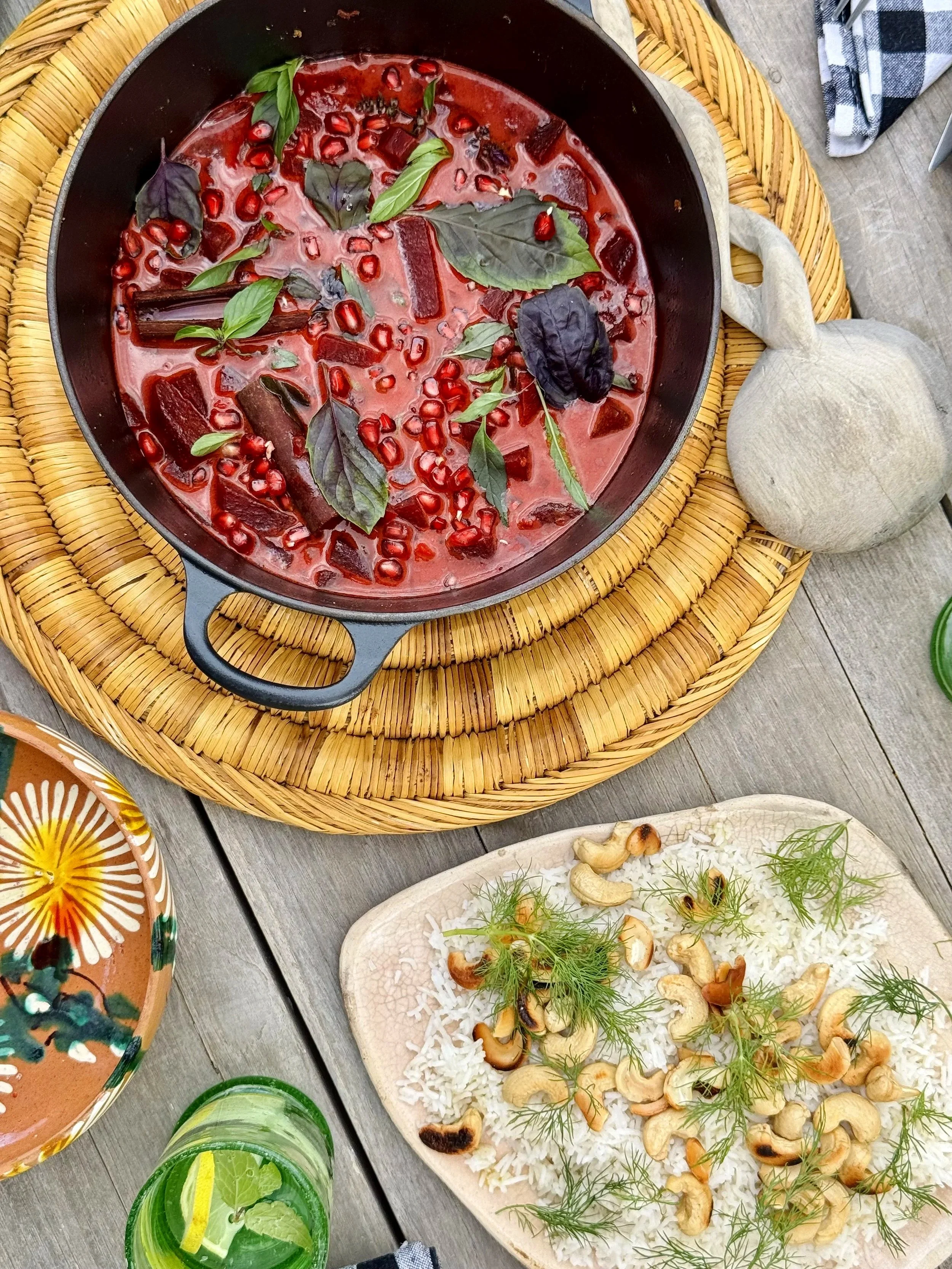
As far as I can remember, I have had a bit of a love-hate affair with beetroot.
When I was little, it was served as a raw salad at daycare, and I quickly came to the conclusion that I didn’t like it. It was only much later, when I studied Ayurvedic nutrition and began to understand the qualities of food, that I realised an ingredient also needs to be prepared in the right way. Cooking this vegetable makes it easier to digest, and the right spices can completely transform both its flavour and how it feels in the body.
Since then, I have come up with quite a few beetroot recipes, but this Ruby Beetroot Masala remains one of my favourites — especially when we transition into autumn.
In Ayurveda, beetroot is considered a nourishing and grounding root vegetable, with a predominantly sweet taste, alongside some bitter and astringent qualities. Its grounding qualities make it particularly fitting for the cooler Vata season.
I specially prefer beets cooked rather than raw: gentle cooking softens the root and, together with a little healthy fat and digestive spices, makes it easier on a more sensitive or airy digestion. For Pitta, I prepare this masala without any chilli or any too heating spices.
Beetroot is also an interesting food from a modern nutritional perspective. It contains folate, as well as betalains and naturally occurring nitrates. Folate is involved in normal red blood cell formation, while beetroot’s betalains and nitrates are among the compounds that have attracted the most scientific interest around this root vegetable.
Traditionally, beetroot and its leaves have also been valued for their connection with the blood and circulation. If anaemia is an issue, I think of beetroot as a beautiful, nourishing food to include in the diet — alongside other iron- and folate-rich foods.
For this recipe, I cook the beetroot in an iron pan. There is a lovely practical reason behind this: iron can migrate from iron cookware into food during cooking, with factors such as cooking time, moisture and acidity affecting how much is released, hence the vinegar in the recipe.
So there is something quite fitting about this dish: a deep red root that grows beneath the earth, slowly cooked with warming spices in an iron pan. Grounding, nourishing and very much at home on an autumn table.
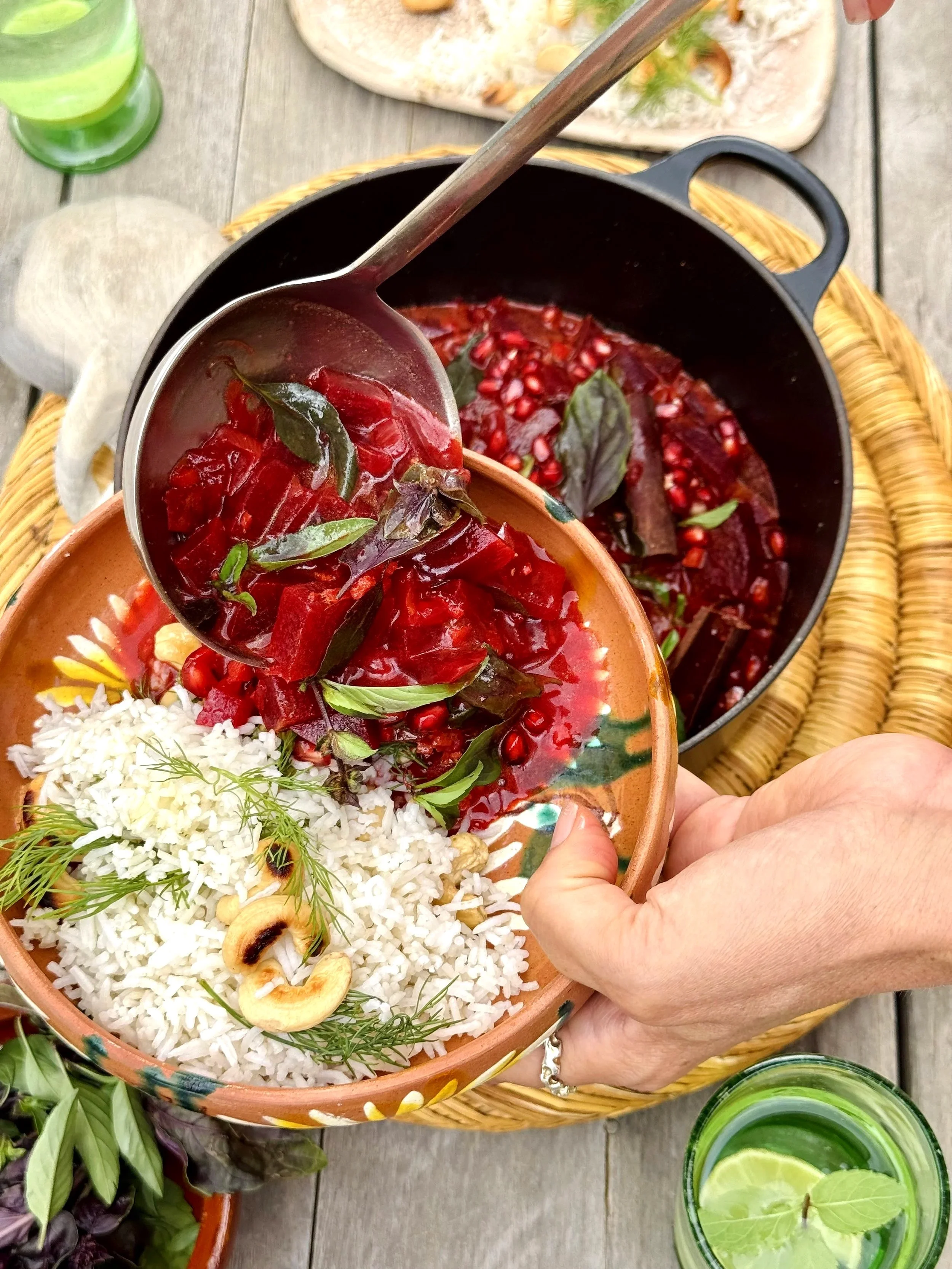
Pair this masala with white quinoa or some fresh steamed basmati rice.
I’ll hope you enjoy this recipe. Let me know how it goes and send or share your pictures of the dish!
Preparation
Cut the beetroot into approximately 1 cm cubes.
Melt the ghee or coconut oil in a heavy-based pan over medium-low heat. Add the curry leaves and sauté for 10–30 seconds, until fragrant.
Add the onion, ginger and chillis, if using, and sauté for 3–5 minutes, until soft and translucent. Add the garlic and cook for another minutes, until fragrant. Be careful not to let the garlic burn.
Add the beetroot, cinnamon stick’s, bay leaf, cloves, ground coriander, turmeric, vinegar and coconut milk and a little bit of water. If you are leaving out the chilies, add the whole black peppercorns instead.
Stir well, cover and simmer over very low heat for 15–20 minutes, or until the beetroot is tender. Stir occasionally. Add a little water if you see there is more moistens needed.
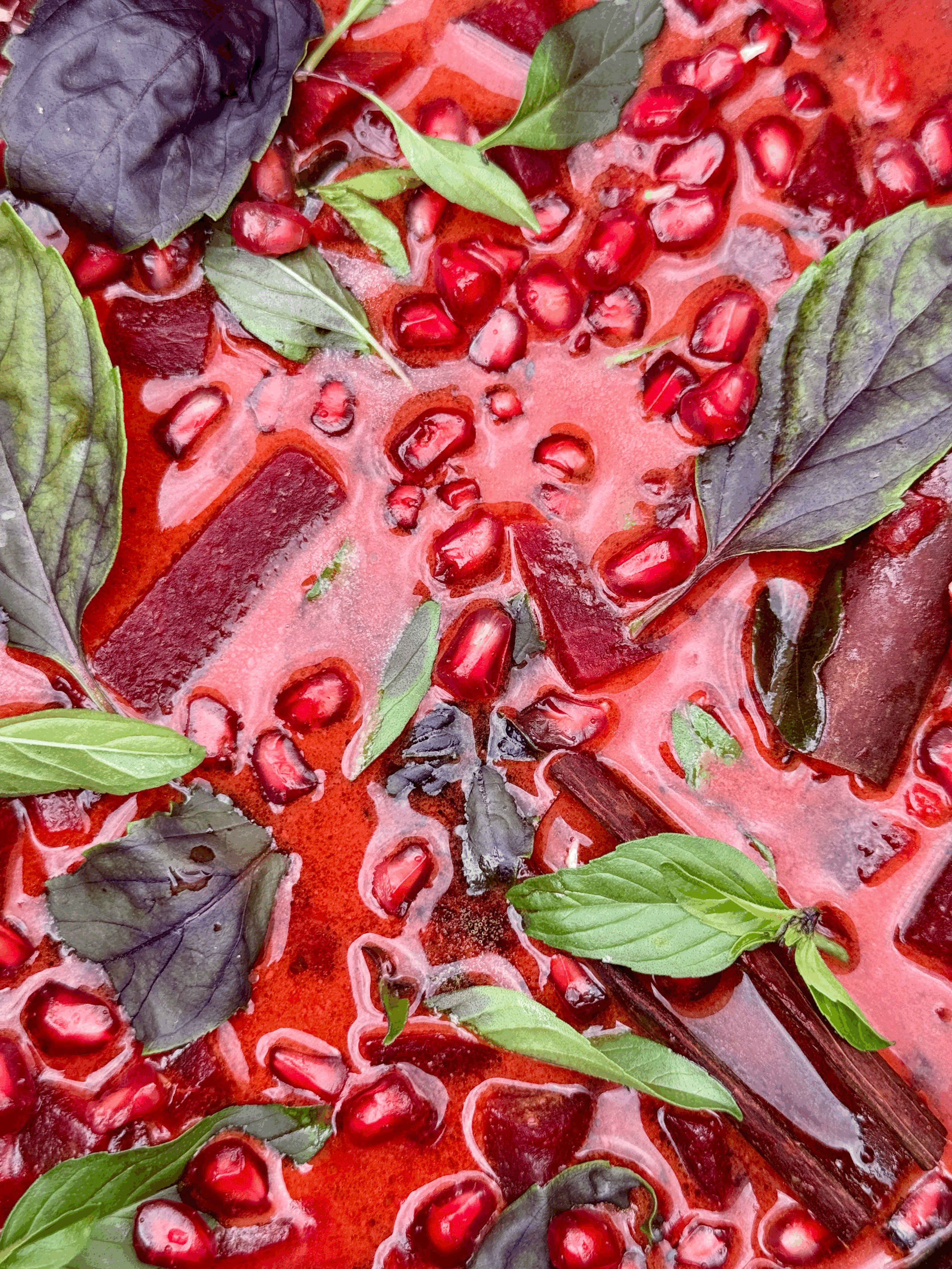
Season with salt and pepper to taste and serve with fresh herbs like Thai basil (regular basil works as well) and add some pomegranate to add an extra dash of ruby colored gems!
This recipe was originally shared with Studio VVOO as part of The Seasonal Table series.
Ingredients
Yield: 4 servings
Time: 35 minutes
3-5 medium beetroots, trimmed and peeled
2½ tbsp ghee or coconut oil, if vegan
1 thumb-sized piece fresh ginger, finely chopped
1 small onion, finely chopped (I use a sweet variety)
1-2 small fresh green chilli’s, finely chopped (optional; if you are Pitta, leave it out and substitute with 6–8 whole black peppercorns)
1 bay leaf
2 cloves
1 sprig fresh curry leaves, leaves picked, or 8–10 dried curry leaves
2 garlic cloves, pressed, remove the inner green sprout in centre
2 small Ceylon cinnamon stick
¾ tsp ground coriander
¼ tsp ground turmeric
2 tsp white or apple cider vinegar
135 ml coconut milk
Salt and pepper, to taste
Handful of fresh herbs Thai basil, regular basil or cilantro
Handful of pomegranate seeds.